Jensen Huang stood on stage at GTC last week and said something most finance leaders haven't fully processed yet.
**A $500,000 engineer who doesn't consume at least $250,000 in AI tokens annually will deeply alarm him.**
Not a red flag. Not a concern. *Alarming.*
Tokens — the unit AI systems use to process text — are now "one of the recruiting tools in Silicon Valley," according to Huang. He's proposing them as a compensation component on top of base salary, designed to amplify engineer output ten times over.
That last number is worth sitting with. Not 20% more productive. Not twice as fast. **Ten times.**
---
## What this means for finance
Huang didn't frame tokens as IT infrastructure. He framed them as human capital.
By tying token budgets directly to salary, Nvidia signals that compute scarcity is now a limiting factor in engineering output.
That reframing has a direct consequence for Finance. If token spend is proportional to headcount — and Huang is suggesting something like 50 cents on every salary dollar — then it's no longer a line in the infrastructure budget. It belongs next to payroll. It scales with hiring. It compounds with every new model your teams adopt.
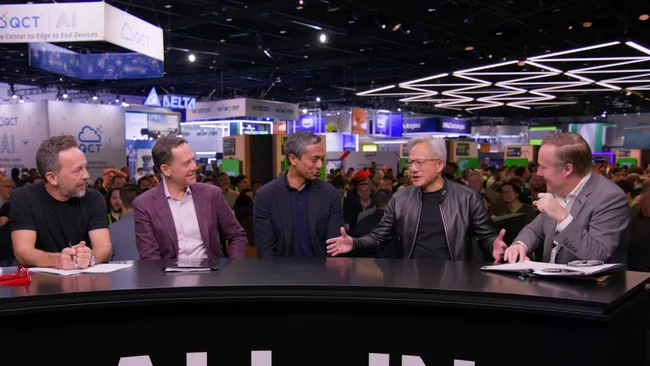
Nvidia is "trying to" spend $2 billion on tokens for its engineers. That's not a rounding error. That's a budget line that requires attribution, forecasting, and governance.
**Most finance teams have none of those three things in place.**
---
## The problem isn't the spend. It's the visibility.
Your engineering teams are already consuming tokens. They're already spinning up agents, running inference, building on top of OpenAI, Anthropic, Google, and a handful of others. Some of that spend is sanctioned. A lot of it isn't.
Right now, the CFO's view of that activity is: **nothing.**
No attribution by team or workflow. No forecast against budget. No signal on whether the spend is generating the productivity Huang promises — or just generating invoices.
Huang can set a token consumption target for his engineers because he's running one company, with one cost center, with direct visibility into the infrastructure. Most enterprise CFOs are looking at AI spend through a quarterly cloud bill, after the fact, with no decomposition whatsoever.
That's the gap.
---
## Tokens are moving from tech to treasury
The trajectory here is clear. Tokens started as a developer metric — something engineering tracked in dashboards next to API latency. Then they became a business metric, when CFOs started getting surprised by the invoices.
Now Jensen Huang is proposing they become a **compensation metric** — a number you evaluate employees against, like revenue per head or deals closed.

When the CEO of the world's most valuable chip company tells the market that token consumption is a performance indicator, Finance needs a system to see it.
Not a spreadsheet. Not a quarterly cloud bill. A real-time view of what your organization is consuming, which teams are consuming it, whether it's within budget, and whether it's generating the return Huang says it should.
**That's what Taiken is built for.**
Taiken is building financial governance tooling for enterprise AI spend. If you're a CFO or VP of Finance managing material AI budgets, apply for design partnership.